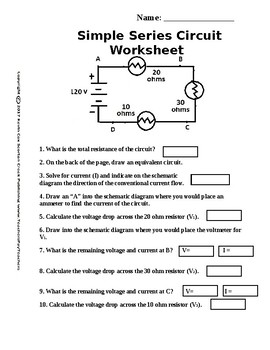

Summary In the everyday electrical devices we use — calculators, remote controls and cell phones — a voltage source such as a battery is required to close the circuit and operate the device. In this hands-on activity, students use batteries, wires, small light bulbs and light bulb holders to learn the difference between an open circuit and a closed circuit, and understand that electric current only occurs in a closed circuit.
This engineering curriculum meets Next Generation Science Standards (). Copyright © UK Power Networks Engineering Connection Electrical engineers design the circuits and batteries that are in the devices and appliances that we use every day. Circuits can be found in music players, computers, video games, appliances, microwaves, phones, televisions, cameras, medical equipment, vehicles and so many more products. Engineers take seriously the responsibility of designing circuits that work dependably and safely. While new devices are constantly being developed around the world, engineers strive to create safer, more efficient products that ultimately help improve people's lives. Learning Objectives After this activity, students should be able to: • Define, recognize, build and draw a closed circuit.
• Explain why a closed circuit is required for any electrical device to operate. Windows xp sp2 dengan serial number. • Describe the transformations of energy that occur in the circuit. • Use correct operations and appropriate methods to solve Ohm's law problems.
More Curriculum Like This. Each TeachEngineering lesson or activity is correlated to one or more K-12 science, technology, engineering or math (STEM) educational standards. All 100,000+ K-12 STEM standards covered in TeachEngineering are collected, maintained and packaged by the Achievement Standards Network (ASN), a project of D2L (www.achievementstandards.org).
Children discover for themselves how to make a simple circuit to light a bulb using a few basic components. Compare the circuits to a diagram of a simple circuit to see how they can be represented. Suitable for Year 2 pupils. Find other lesson plans and resources at www.hamilton-trust.org.uk. Fourth graders get to learn about, and maybe even make, simple electrical circuits this year. This great worksheet is all about circuits, to test your fourth grader's.
In the ASN, standards are hierarchically structured: first by source; e.g., by state; within source by type; e.g., science or mathematics; within type by subtype, then by grade, etc. This Performance Expectation focuses on the following aspects of NGSS: Science & Engineering Practices Disciplinary Core Ideas Crosscutting Concepts Make observations to produce data to serve as the basis for evidence for an explanation of a phenomenon or test a design solution. Energy can be moved from place to place by moving objects or through sound, light, or electric currents. Energy is present whenever there are moving objects, sound, light, or heat. When objects collide, energy can be transferred from one object to another, thereby changing their motion.
In such collisions, some energy is typically also transferred to the surrounding air; as a result, the air gets heated and sound is produced. Light also transfers energy from place to place.
Energy can also be transferred from place to place by electric currents, which can then be used locally to produce motion, sound, heat, or light. The currents may have been produced to begin with by transforming the energy of motion into electrical energy. Energy can be transferred in various ways and between objects. Do you agree with this alignment? Thanks for your feedback!
- Author: admin
- Category: Category