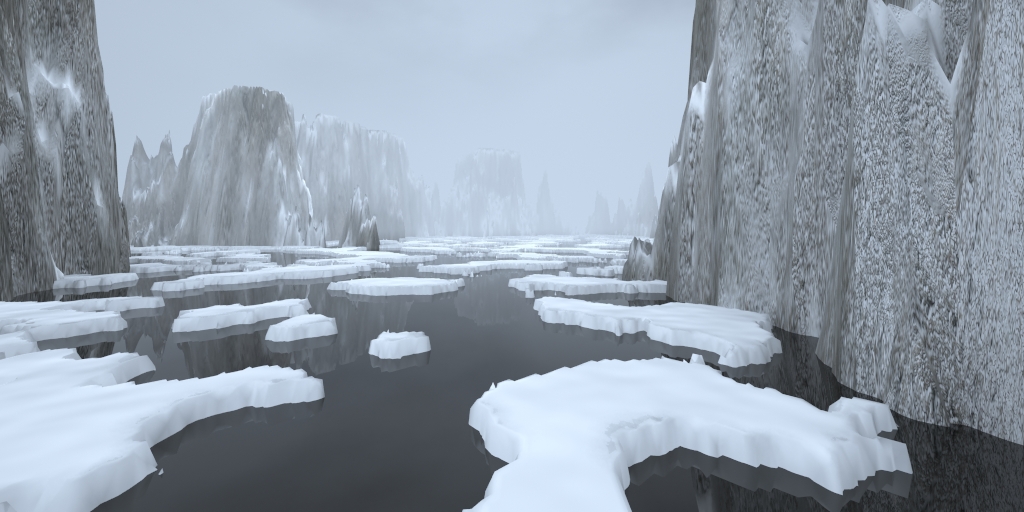

Free 3D Models, TF3DM is the go to place where you can share your free 3d assets and download instantly any you like. TF3DM hosts 15.000+ 3d models, in various formats for BLENDER, OBJ, 3DS, C4D, MAX, MAYA, which you can download absolutely for free. Based on geometric theories, the paper puts forward a new method to compute point cloud of a complex 3D geological model for a hillside landscape design.
Contents • • • • • • • Introduction [ ] I worked with a group to make a small animation for class and I was responsible for the environment modeling. I really liked the results of the process I used, so I decided to share it with others. By the end of this tutorial you'll have the know-how to create your own flexible, realistic terrain utilizing multiple textures for different ground types.
This tutorial assumes that you have the very basic understanding of using Blender (how to add/remove a mesh, how to change views, etc.) I use the following textures in this demo. Feel free to use them if you don't have something on hand to use. NOTE: This page uses a different grass texture for licensing reasons (sorry). Creating the Canvas [ ]. The 'canvas' that we'll use for our terrain is an evenly spaced grid of vertices. Open a new project, delete the default cube, and add a grid mesh. Use whatever size you want.
The more vertices you have, the more detailed and realistic your landscape will appear, but don't get crazy with it since we'll apply subsurfacing at the end to smooth it out. At the same time, you do want enough vertices to prevent sharp edges, and we'll need them in the second tutorial when we cover texture stenciling. So consider how big you want your landscape and try to find a reasonable balance.
I like to start with 100x100. The grid will be pretty small, so scale the entire thing up, let's say by a factor of 20. This grid will be used to build our landscape by pulling hills and mountains out of it. Noob Note: If you don't want to have to delete the default cube every time you open a new file, just delete the cube once so you have the blank window (only lamp and camera left). Then select File - Save default settings or hit Ctrl+U. From now on, each new project you create will start off without the cube. Molding the Mountains [ ] The key to making good mountains is using the proportional edit mode ( OKEY) and constantly adjusting the radius of influence.
VMware's Virtual Cloud Network vision VMware's answer is something it is calling the Virtual Cloud Network, or VCN, which is a single network abstraction that creates operational consistency, regardless of the underlying hardware or services. But this transition is complicated by the fact that legacy networks exist as a set of discrete silos, like the data center, WAN, edge, cloud and others. Bubble shooter premium edition crack cocaine.
If you've already gone through the tutorial then this section will be familiar. One major difference is that in this tutorial I recommend rotating the 3D view around so you have a good view of all three axes instead of working in the front or sides view. Using the proportional editing tool affects multiple vertices, and it helps to see what effect your changes are having as you make them.
- Author: admin
- Category: Category